The Primary Bath Renovation Sequence Cheat Sheet
Over the years, I’ve heard of or seen a lot of mistakes that could have been avoided.
I was once hired by a client who was building a new home. She initially believed she would have enough time to handle all the selections herself, despite having a demanding full-time job. It didn’t take long for her to realize that managing those decisions was practically a full-time job all by itself.
When we began, she had already chosen the plumbing fixtures because the contractor said he needed that information first. I explained that the plumber does need those details before rough-in begins, since requirements can vary by manufacturer. However, plumbing fixtures are much lower on the design selection priority list. Just because a contractor needs an item early does not mean it should be selected first in the overall design process.
Once we made our other selections in the correct order, the original fixtures didn’t work well. Thankfully, that order hadn’t been placed, so we were able to find the perfect plumbing to complement our cabinets, countertop, tile, and lighting.
What I’ve seen when it goes wrong.
Sometimes clients call me in the middle of a renovation. Other times, they reach out for a new project because the previous one didn’t turn out as planned. They often say everything seemed to be going smoothly, they liked their contractor and the selections, but the result just didn’t feel as wonderful as they had hoped. It was fine, but it wasn’t WOW!
The reason is usually the same: decisions are made without understanding how each choice affects the others. People choose items because they like them individually, not because they work together, and the room ends up telling a story no one intended. The tile is beautiful. The fixtures are beautiful. But the space still feels off, and they can’t explain why. I can. It’s the sequence.
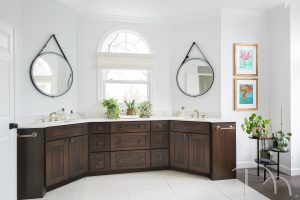
The play of light and dark is what makes this bathroom interesting. Dark cabinets on a white floor, dark floor under the white tub, and a dark base anchoring the white shower walls. Imagine how boring it would be if the entire floor were white./ Photo by Karen Palmer
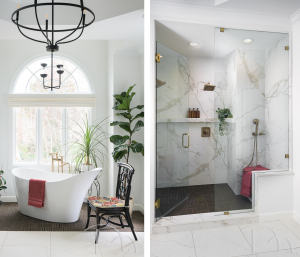
Notice how the tub is angled for birdwatching while bathing and how the hand-held shower head is located next to the bench. Details like these are the enhancements that most rooms never have./Photos by Karen Palmer
How I structure selections
I have a framework I use on every project. I call it The Design Pyramid Method™️. The principle is simple: you build from the largest decisions to the smallest. Foundation first. Details last. Paint – in every room, always, without exception – comes last, because I can find a paint color that works with everything I’ve already chosen. What I cannot do is build a room backward from a paint chip.
In a kitchen or bathroom, the pyramid has higher stakes than anywhere else in the house because the decisions at the foundation involve plumbing. Plumbing that gets set in concrete before the first tile gets laid. Decisions that affect every other square inch of the room’s layout. Not pretty when it goes wrong.
What I can tell you is this: the rooms that feel genuinely extraordinary, not just expensive, but right, inevitable, like they couldn’t have been any other way, are the ones where the sequence held. Every time.
Layout and flow come first. The first discussion is how this room works when two people are getting ready at the same time on a Tuesday morning, and one of them is running late. How many towels do you use when you shower? How many products do you use on a regular basis? Do you need a magnifying mirror? The details must be known before we can lay out the room correctly.
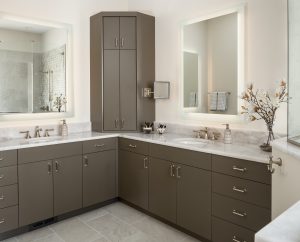
The entire layout of this room was reconfigured. Plumbing moved, electric moved, and even the entry door moved. We created more storage, more counter space, and room for 2 people to get ready at once./Photo by Karen Palmer
___________________________
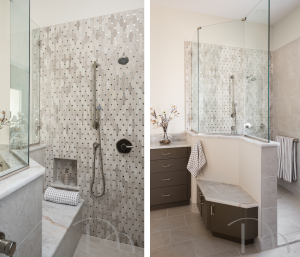
We ditched the tub and created a spacious shower with a bench both inside and outside on the angled wall./Photos by Karen Palmer
___________________________
Tile is what takes up the largest visual surface in a room, and it sets the material language for everything that follows. Floor, shower walls, and vanity backsplash. It makes sense to choose this first, especially if you want statement tiles. Then choose the cabinets and countertops that will complement the tile. They should be beautiful by themselves, but not fighting the tile for dominance. These items set your color palette.
Plumbing fixtures, mirrors, and hardware are next up. What metal tones work best with the color palette? Mix metals or stay with one? Lighted mirrors or not? The groundwork was laid with the tile and cabinets. These items are jewelry for the room.
Lighting I treat as a system, not a selection. By the time I specify lighting, I know the tile, fixtures, vanity height, mirror size, the quality of natural light, and what it does to the surfaces at different times of day. The color temperature of your lighting is critical; too white and it makes your bath feel like an operating room and changes the look of every color in the room. Your lighting system can enhance the room or destroy it.
Remember when I said paint is last? Now that everything is selected, choosing the color and tone of paint to be the perfect background for all those beautiful items is the final decision to be made.
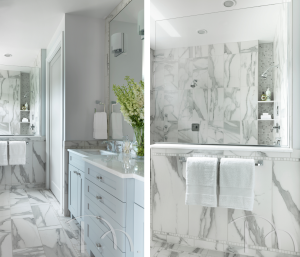
Tile is the standout feature in this bathroom. While all the other selections are individually beautiful, they all needed to play second fiddle to the dramatic tile. /Photo by Alise O’Brien.
___________________________
What you need to remember
A well-sequenced primary bath renovation is one of the best investments a homeowner can make – in function, in daily quality of life, in the long-term value of a home. When it is done right, the result is genuinely extraordinary.
The sequence is the key and not optional. It is the reason some baths feel like they were designed by someone who knew exactly what they were doing, and others feel like a collection of individually good decisions that never quite add up to a room.
There is no Instagram post about confirming your plumbing rough-in. Nobody pins their drain location to a mood board.
The unsexy decisions at the foundation of the pyramid are the ones that determine whether the beautiful decisions on top of them land the way they should.
Sequence matters. First things first.
Ready to have that conversation?
Book a consultation → marciamooredesign.com/contact