The Forever Home: Luxury Design That Supports Every Life Stage
The best aging-in-place design is the kind you never notice.
After forty years of designing homes, I’ve seen how the conversation around aging has changed. Thankfully. Today’s clients are thoughtful, design-savvy, and very clear on one thing: they’re not interested in homes that look like they’re bracing for a medical event, but they are very interested in comfortably aging in place.
I personally have reached an age where I’ve started planning for the future. I recently went from a 3-story townhouse to a sprawling ranch home. Not because I wasn’t capable of using the stairs, but because I wanted to have a plan in place for the day when it might be an issue. The future need for one-story living coincided nicely with my love of Mid-Century Modern ranch houses. Lucky me!
What I wanted, and what my clients have expressed, is to have a home that supports how we actually live now, and how we’ll want to live ten, twenty, even thirty years from now. Homes that feel beautiful and personal. Homes that work quietly in the background as bodies change, energy shifts, and life evolves.
That’s where truly good design lives. In choices that feel intentional, not reactive. In spaces that work well without the background ever drawing attention to why.
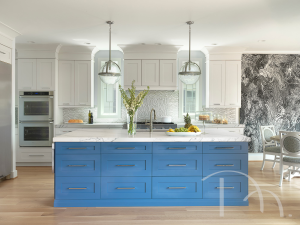
Extra wide space between cabinets to accommodate a walker./Photo by Alise O’Brien.
When Design Meets Real Life
A few years ago, we worked with a couple who came to us with a challenge that’s becoming more common: they had teenagers still at home and a family member who needed a walker and might eventually need a wheelchair. They weren’t elderly. They weren’t downsizing. They were building a home that needed to work for multiple generations and multiple life stages, all at once.
They were also clear that they didn’t want their home to look or feel clinical. They wanted style. They wanted warmth. They wanted a home that felt like them.
This is exactly the kind of project that proves aging-in-place design isn’t about compromise. It’s about intention.
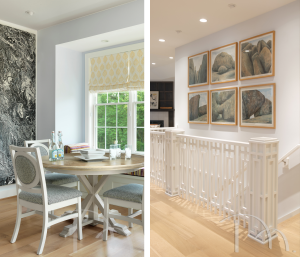
BRAEAKFAST AREA – Plenty of space between the table and the kitchen island for a wheelchair to maneuver /Photo by Alise O’Brien.
What We Built (And Why)
We started with the layout. Every doorway in the house was enlarged to accommodate walkers and wheelchairs. But here’s the thing: wider doorways don’t read as medical. They read as generous. They make a home feel more open, more welcoming, more luxurious. It’s one of those decisions that benefits everyone who walks through the door, whether they need the extra width or not.
Hallways and walkways were designed with spaciousness in mind. No tight squeezes, no awkward furniture arrangements that force you to turn sideways. In the living room, we left ample space between the sofa and the patio door. In the breakfast area, plenty of room between the table and the kitchen island. These aren’t accommodations. They’re breathing room. They make the home feel calm and uncluttered.
The kitchen became a study in function that doesn’t announce itself. We created extra-wide space between the cabinets to accommodate a walker, but what that really means is a kitchen that never feels cramped. Multiple people can work in the space comfortably. You’re not constantly navigating around each other. It just works.
In the office, rather than a side table that would take up valuable floor space, we designed custom cabinets with a retractable shelf. When you need it, it’s there. When you don’t, it disappears. A walker or wheelchair can move freely into the room. It’s the kind of detail that looks like smart, streamlined design because it is.
One of my favorite solutions was in the back hallway leading to the garage. We repeated the staircase rail design as wainscoting along the wall, creating a place where the “inside” and “outside” walkers can lean without damaging the drywall. It’s practical, it protects the walls, and it keeps outdoor dirt from traveling further into the home. But it doesn’t look like a walker parking spot. It looks like beautiful, intentional millwork. Because it is.
The bathrooms were designed with extra space for maneuvering. Not because they needed to feel institutional, but because a spacious bathroom is a luxury everyone appreciates. The powder room, like every other room in the house, has a wider doorways and generous clearances. It feels open and comfortable, not tight or utilitarian.
Downstairs, what looks like a closet next to the bar is actually an elevator shaft, ready for the future. In the meantime, it functions as storage. When the time comes to add an elevator, the infrastructure is already there. No tearing into finished spaces. No major construction disruption. Just a simple conversion.
Even the stairs were designed with intention. Two handrails, one on each side, for stability. Small, recessed lights illuminate each step. These aren’t afterthoughts or add-ons. They’re integrated into the design from the beginning, so they feel like they belong.
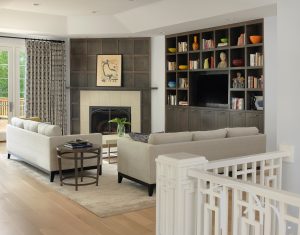
Space between the sofa and the patio door for a wheelchair. /Photo by Alise O’Brien
___________________________
This Isn’t About “Aging.” It’s About Living Well.
I like to reset this conversation early, because it tends to get framed the wrong way. This isn’t about decline. It’s about independence, comfort, and flexibility. It’s about not painting yourself into a corner with your own house.
Universal design benefits everyone. Parents with strollers. Guests dragging suitcases. Someone recovering from surgery. Someone carrying in too many grocery bags because they refused to make two trips. When a home is designed well, daily life just feels easier.
I’ve had clients push back on these ideas in their 50s, then call me years later to say thank you after an injury or unexpected health issue. I’ve also had clients in their 70s say, “I wish we had thought about this sooner.” The truth is, the best time to make these decisions is before you need them. Not in the middle of a crisis.
___________________________
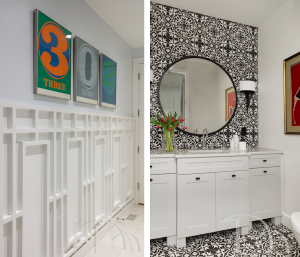
GARAGE ENTRY – The staircase rail design was repeated as wainscoting in the back hallway access to the garage. The “inside” walker can be leaned against this, protecting the drywall from damage, and the “outside” walker is waiting to be used when leaving. Having 2 walkers keeps outside dirt from entering further into the home. / Photo by Suzy Gorman.
POWDER ROOM – Every door in the house was widened to accommodate walkers and wheelchairs. Extra space was provided in bathrooms to maneuver wheelchairs. /Photo by Alise O’Brien.
___________________________
What This Is Not
This is not about turning your home into something institutional. It’s not about planning for worst-case scenarios and letting fear drive design decisions. And it’s definitely not about sacrificing your style for hypothetical future needs.
It’s about designing a home that supports you beautifully through all of life’s chapters. That’s not compromise. That’s thoughtful design.
Why This Gets Missed So Often
Many designers only focus on right now, or at most five years from now. Aging-in-place gets treated as a niche specialty instead of a smart foundation. Trends get more attention than real life, even though trends fade and bodies change whether we want them to or not.
After decades in this work, I’ve seen which homes continue to serve their owners well. The ones that age best aren’t the trendiest. They’re the ones designed with a deep understanding of how people move through their space and how those needs evolve over time.
___________________________
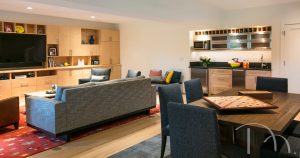
Plenty of space was left between the TV area and the game table. What looks like a closet to the right of the bar is actually a shaft created so an elevator can be added at a future date. /Photo by Suzy Gorman
___________________________
The Real Payoff
This family didn’t just get a house that accommodates a wheelchair. They got a home that feels like theirs. A place where their teenagers can grow up, where family can gather comfortably, where life can unfold without the house getting in the way.
There’s a quiet confidence that comes from knowing your home will continue to support you. Freedom in not feeling forced to move when life changes. Peace of mind in knowing you made smart decisions early. The luxury of a home that works for you instead of against you.
Good design isn’t about freezing a moment in time. It’s about creating a home that grows with you.
That’s not aging-in-place.
That’s designing for life.
If you’re ready to create a home that feels as good to live in as it looks, now and for years to come, let’s talk.
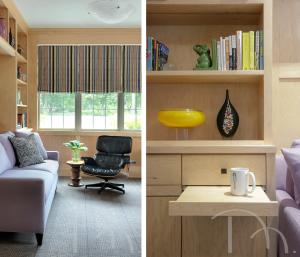
Rather than a side table that would take up too much room, we created a retractable shelf in these custom cabinets, so that a walker or wheelchair could get into the room easily. /Photos by Alise O’Brien and Suzy Gorman, respectively.
___________________________